
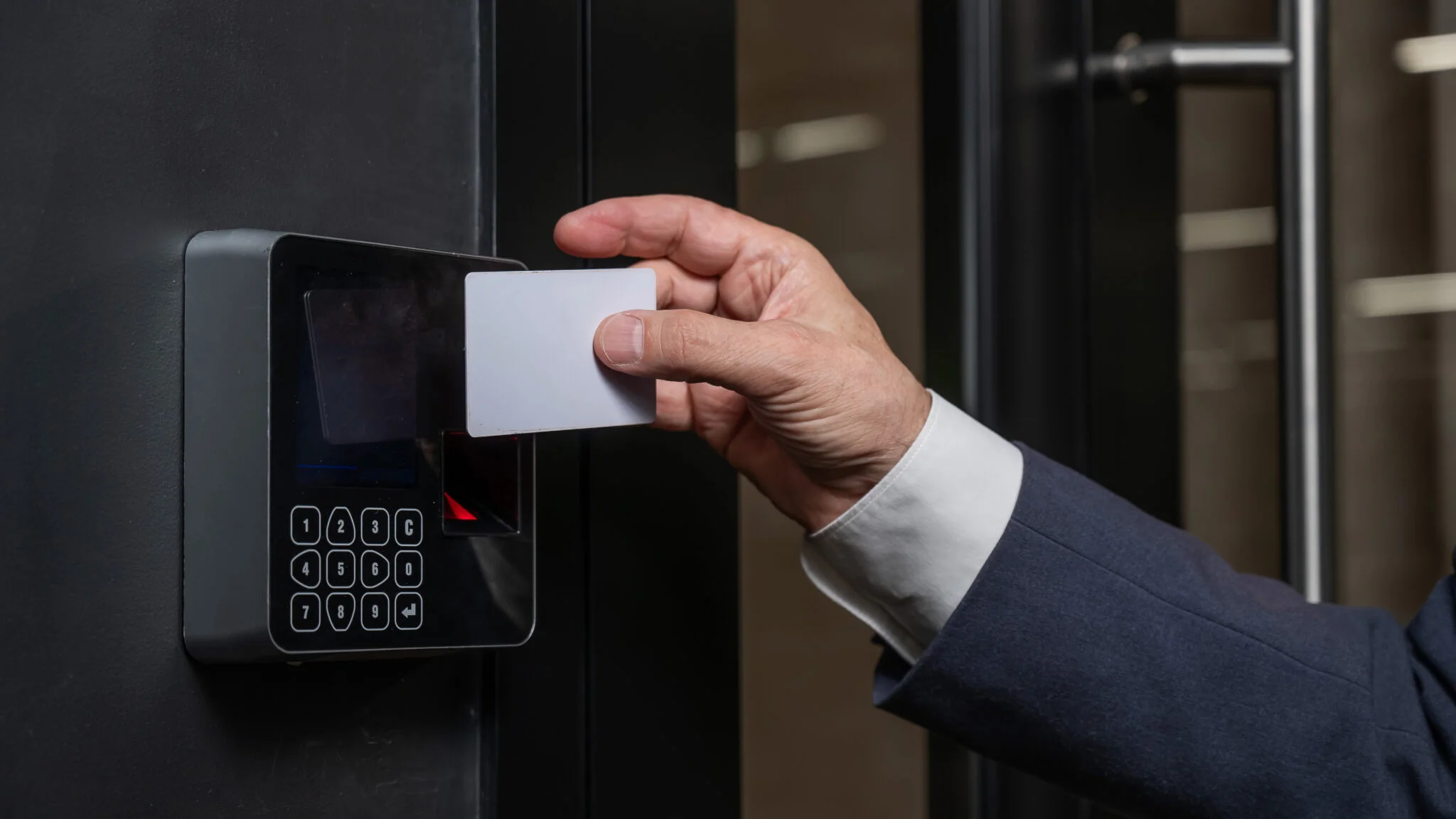
Most facilities run access control and time and attendance as two separate systems. One records who came through which door and when, while the other records who worked and for how long. The first already captures much of what the second needs.
This post explains how to connect access control to time and attendance, and what that connection can feed once it exists. It is written for the operations, HR, and facility leaders who each depend on that data.
Your Access Control Already Knows Who’s There
Every badge-in is a timestamped identity event. It records which person came through which door at what moment, and that covers most of what an attendance record contains.
Running the two systems separately means double entry and constant reconciliation between records that should match by default. A person’s arrival gets recorded once by the door and again in the attendance system, then somebody compares the two and works out which one is right, and the more shifts and doors a facility has, the more of that comparison there is to do.
How the Integration Works
A working time and attendance events can be drawn from the access control system, and attendance feeds payroll, with the door record as the starting point for the timesheet. Three things have to be settled before anything is connected.
First, take inventory of what’s installed. Which access control platform is running, which attendance system sits beside it, how old each one is, and how each is set up all determines how much work is needed.
Second, make sure both systems agree on who each person is. For events to land on the right timesheet, every badge holder needs a matching record on the attendance side.
Third, link physical identity, meaning who badged in, to logical identity, meaning the network, Wi-Fi, and system credentials that same person uses. Security teams describe the framework behind that link as the three A’s: authentication is proving who someone is; authorization is checking whether that person is allowed to do the specific thing they’re trying to do; and accounting here means the log of what happened and when, and an attendance record is an accounting record.
The result is a single source of truth for presence, and one place to look when someone asks why the numbers disagree
Beyond Timekeeping, The True Payoff
Once the integration is in place, badge swipe data drives payroll. At one automotive manufacturer Knight Watch works with, the turnstiles have long tracked time and attendance, and that same data now reaches its assembly lines. When enough certified operators for a line are on site, the line begins its warm-up.
This is building intelligence. The same badge data that opens doors also tells operations who is ready to work. Timesheets and payroll read from one record, and operations can act on who is present. Moving security onto the cloud identity and network tools than the rest of IT already runs on tends to open up capabilities nobody planned for at the start.
Built for this: Sangam.
Sangam is a Knight Watch product that keeps the systems holding personnel records, HR chief among them, in sync with the platform that grants access, without anyone rekeying data. It’s product agnostic on purpose, connecting through whatever a system already speaks, and it logs every sync with personally identifiable information (PII) obscured.
Get The Integration Right With Knight Watch
For HR and operations, the practical question is whether the connection keeps working when either system changes. Sangam is built with open standards. Security equipment was once fairly open, with products from different makers working together, and cloud platforms have been narrowing that openness because lock-in is more profitable for a vendor. One vendor’s platform for both sides removes the double entry, but it leaves a facility with two options when its needs change: keep paying that vendor, or rip the system out.
A connection built on one vendor’s closed interface carries a version of the same risk. Keeping a facility’s options open is exactly what Knight Watch built Sangam to do, so the integration isn’t tied to one maker’s interface, and where two systems don’t share a standard, Knight Watch engineers build custom software that bridges them. On the hardware side, much access control runs on Mercury boards, which let a facility change the software that drives the doors without replacing what sits behind them. Ask any integrator how a connection will survive a software update on either side, and how it will be monitored afterward.
Keeping the connection healthy is the other half. Two products from two vendors each change on their own schedule, and a connection built once and left alone has nobody assigned to notice when one side moves. Knight Watch supports Sangam through one number, 24/7/365, under a System Support Agreement that covers version upgrades, maintenance, and configuration changes as an organization’s systems change. Knight Watch is a Michigan building integrator with 30 years of experience in security systems, building automation, fire systems, and custom software, and when something does break, Knight Watch guarantees a four-hour response within its service area, backed by roughly 140 local technicians.
Talk to an integration engineer about what connecting your access control and attendance systems would take in your facility. If you would rather start with a question, contact Knight Watch directly.
Recommended FAQs
Can any access control system connect to time and attendance software? Not always, and how easily depends on what the access control system exposes and what the attendance software accepts. Some systems are more open than others, and cloud platforms have been closing off openness that older on-prem systems once had.
What happens to attendance tracking if the access control system goes down? Attendance records have gaps for as long as badge events stop arriving, unless the integration is designed to cover them. How those gaps get filled, and how quickly a failed reader or server gets back in service, belongs in the design from the start.
How long does integrating access control and attendance systems take? It depends on the systems involved and how well their current state is documented. For common platform pairings, Knight Watch often has an integration already built, which deploys faster; otherwise Knight Watch’s engineers build a custom connector to bridge the two, which adds time. An assessment settles which path applies.
Does connecting these systems raise employee privacy concerns? It can, because badge data records when and where a person was. The integration does not create new data, since the badge system already records these events, but it puts that data in front of more people and systems, so who can see it and how long it is kept need a decision from HR and legal before the integration goes live.